
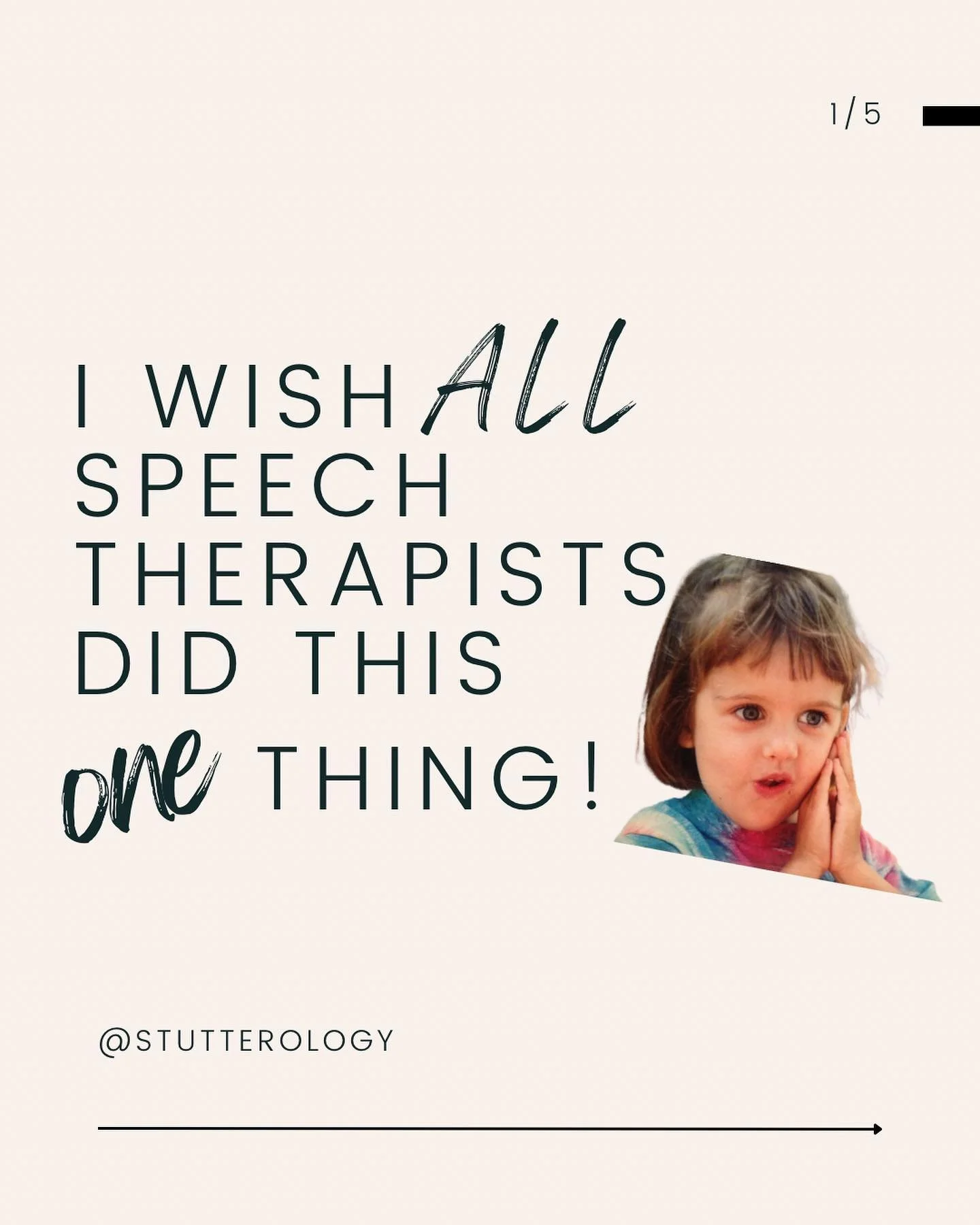
The more I interact with others who stutter, the more thankful I am for one of my earliest SLPs.
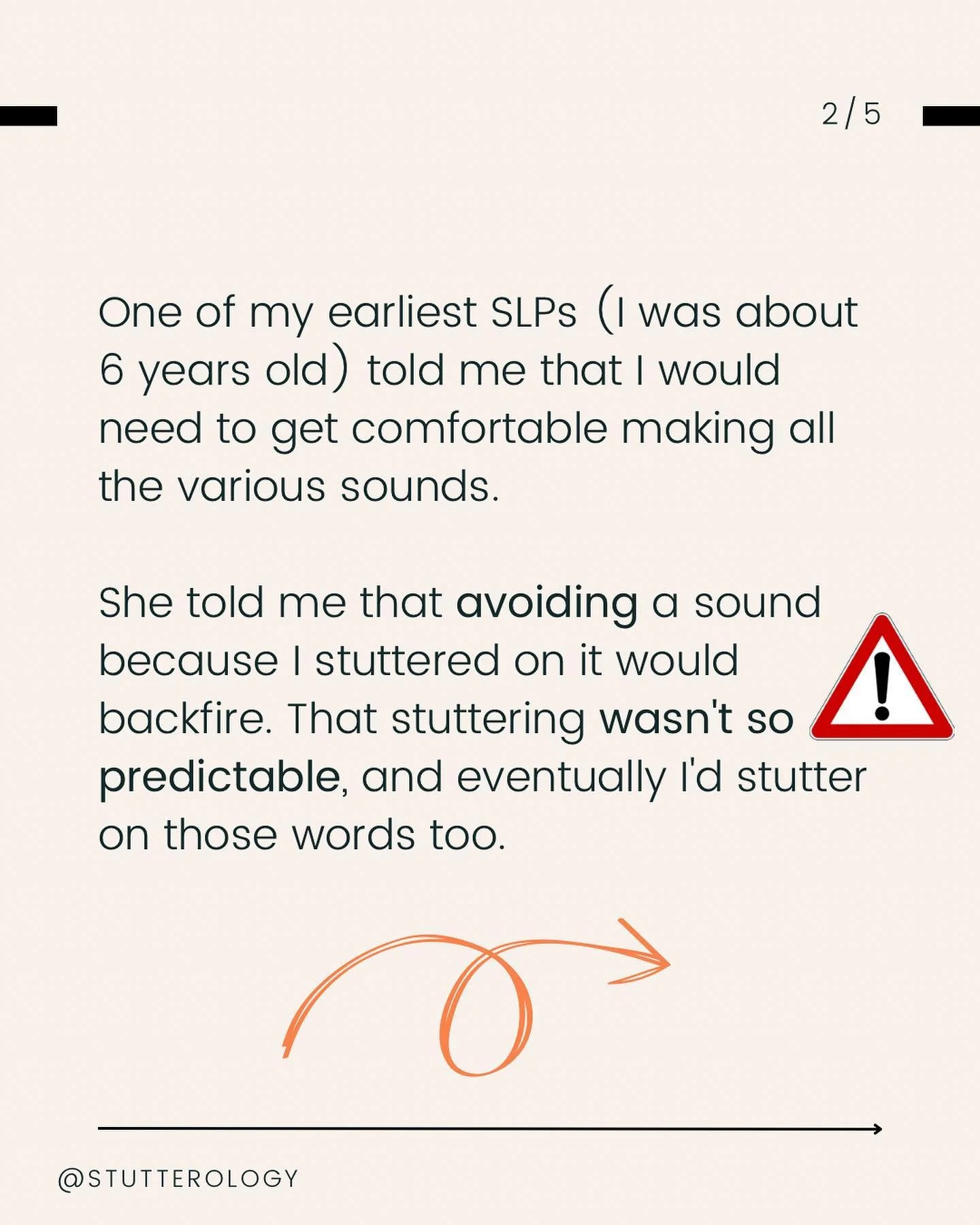
While I can’t remember her exact words, I know she was kind about it. Encouraged me to say words even with a stutter. She helped me learn that avoidance wasn’t worth it.
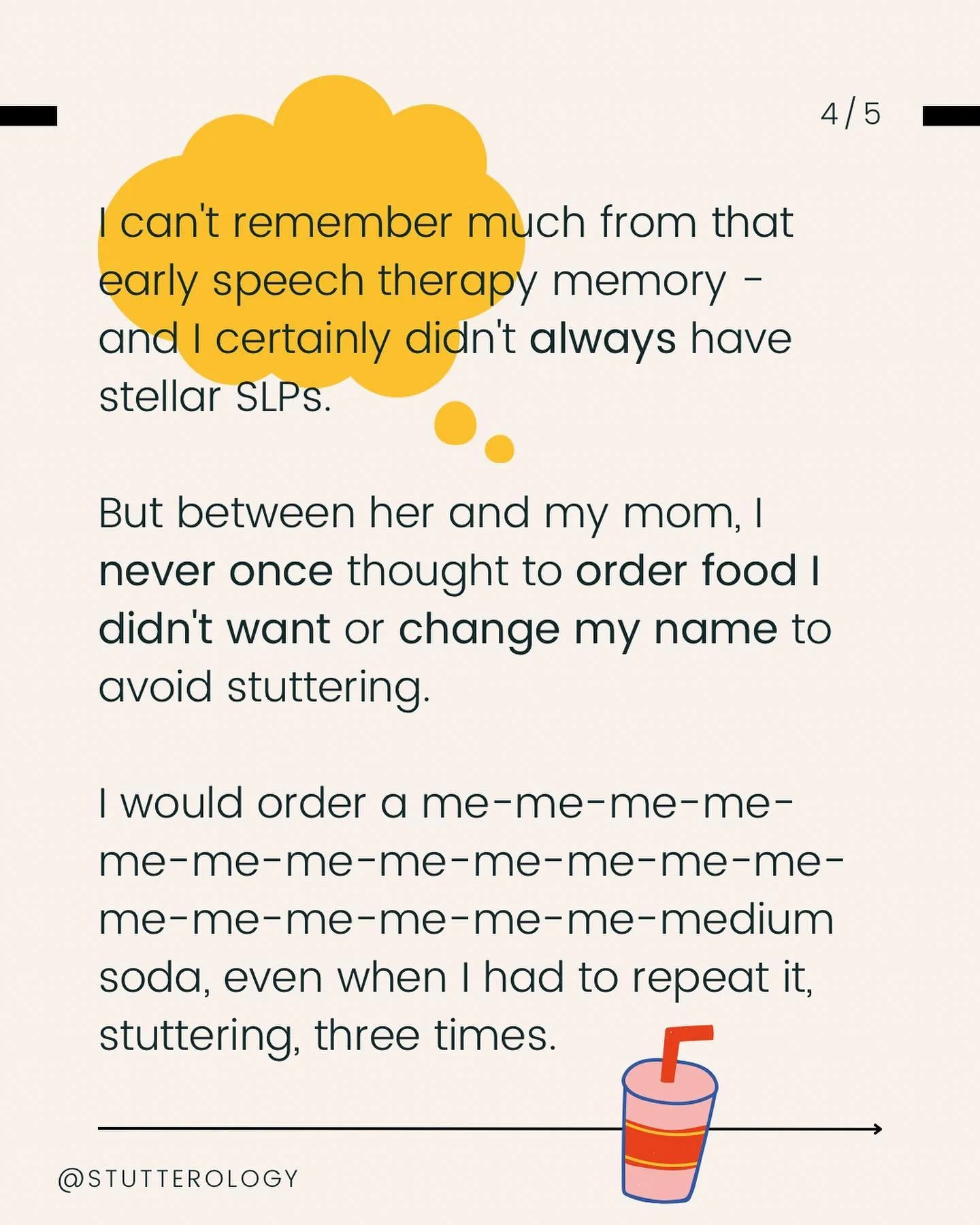
And while I still avoided speaking in general sometimes… or I’d switch out a word at the last second (“interesting!” I’d say when I meant “funny!”), I never tried to create a life that avoided saying certain sounds. I didn’t order a hamburger when I wanted a soup. And so many people who stutter do this.
I laugh sometimes with fellow PWS. “I wasn’t that smart,” I’d joke as someone shares that he’d change his name at Starbucks. But in hindsight, I think it was that I knew to not bother. I knew stuttering was chaotic, so I might as well get used to stuttering on my name. Every. Single. Time. Plus, eventually I’d have to say my name.
(I was kind of terrified of losing the entire alphabet.)
Techniques will fail. The toolbox won’t always work. So how do you prepare someone for those moments where the stutter will come anyway?
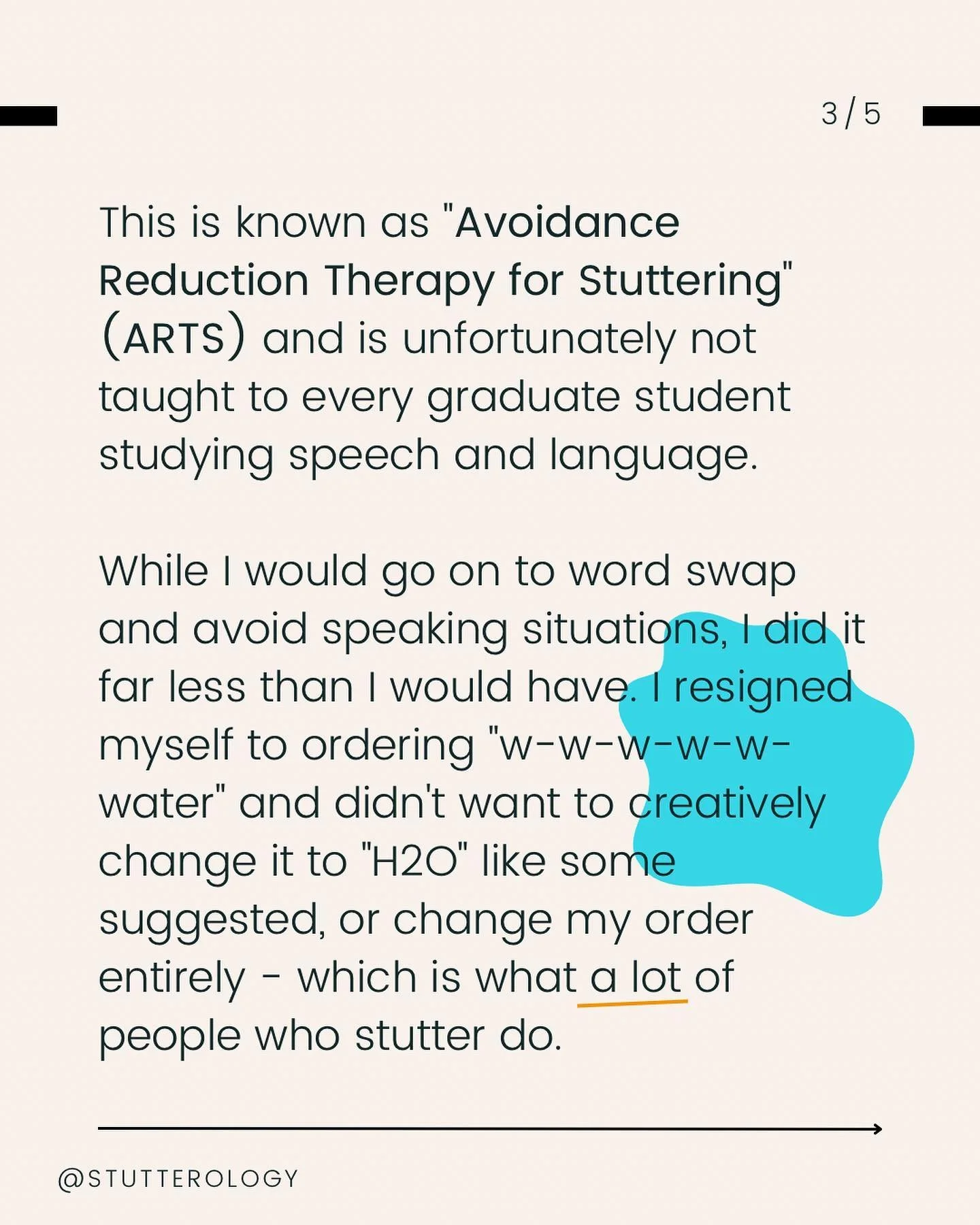
Avoidance Reduction Therapy for Stuttering (ARTS)


Previous
Previous
Deedee Scalzetti - Quote
Next
Next